The messengers, not
the messengers' cells.
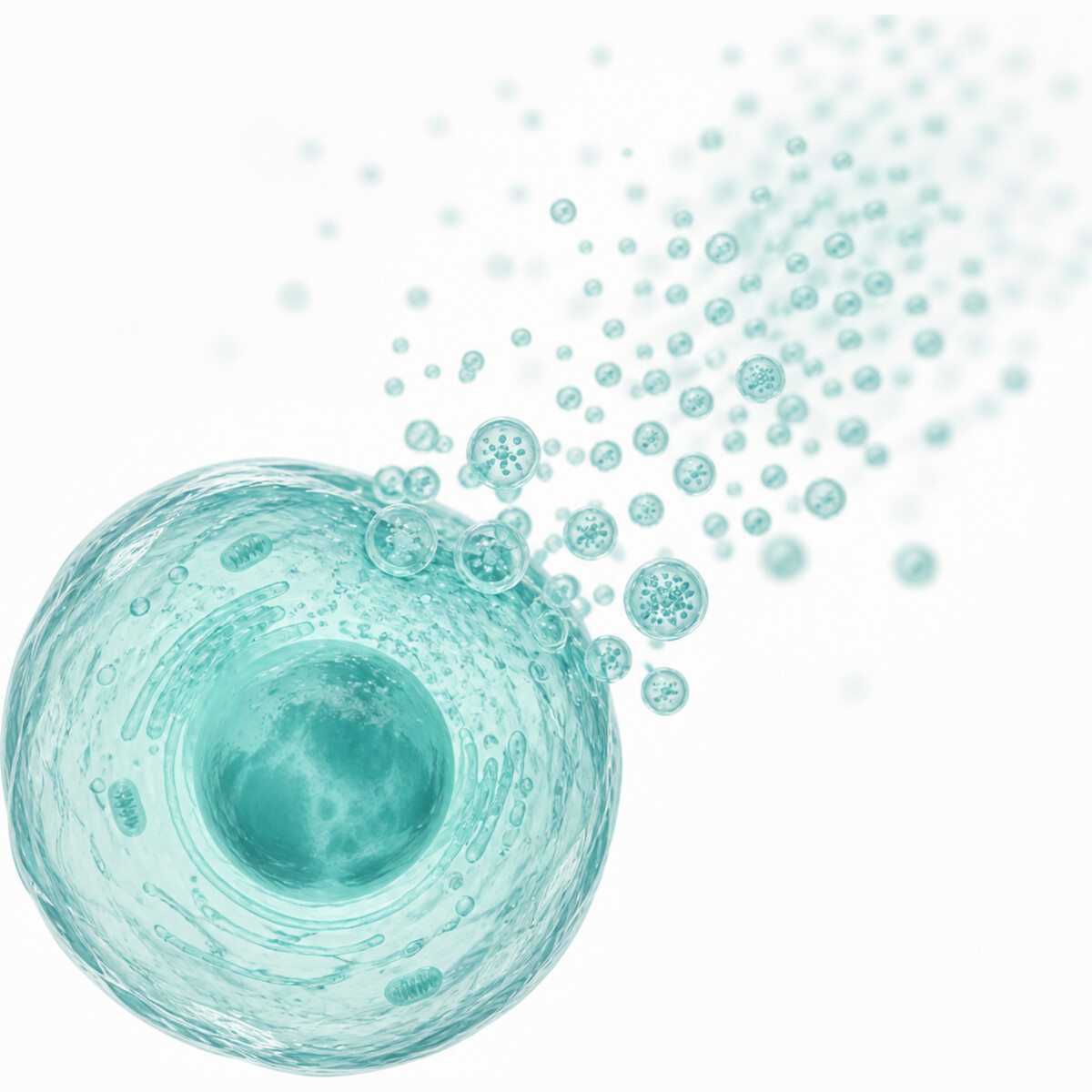
Stem cells don't just repair tissue by becoming new cells. Much of their effect comes from the molecules they secrete, signals that tell surrounding tissue how to heal. These secreted molecules collectively form what's called the "secretome."
Secretome therapy isolates these bioactive signals and delivers them directly. No live cells are transplanted. This sidesteps concerns about immune rejection or tumorigenicity that come with cell-based therapy, while preserving many of the same repair and anti-inflammatory benefits. It's a simpler, lower-cost, lower-risk approach.
Small membrane-bound vesicles (30 to 150 nanometers) released by stem cells. Exosomes carry proteins, lipids, RNA, and microRNA that influence surrounding cells. They're the primary communication vehicle through which stem cells orchestrate tissue repair, now used independently in secretome therapy.
Signalling proteins that stimulate cell proliferation, differentiation, and tissue reconstruction. Specific growth factors in the stem cell secretome (VEGF, HGF, FGF, IGF, and others) promote new blood vessel formation, cellular regeneration, and wound healing.
Molecular messengers that regulate immune response and inflammation. Anti-inflammatory cytokines in the secretome calm excessive immune reactions, reducing swelling, pain, and tissue damage in chronic inflammatory conditions.
Because secretome therapy uses isolated molecules rather than living cells, there's no donor cell to trigger immune rejection. This makes it particularly suitable for patients with compromised immune systems or those requiring repeated treatments over time.
Secretome and MSC therapy aren't alternatives, they're complementary. Adding secretome infusion to MSC IV therapy can improve both the immediacy and depth of treatment response. Many protocols at 23C use both in combination for synergistic effect.