Not symptom management.
Actual tissue repair.
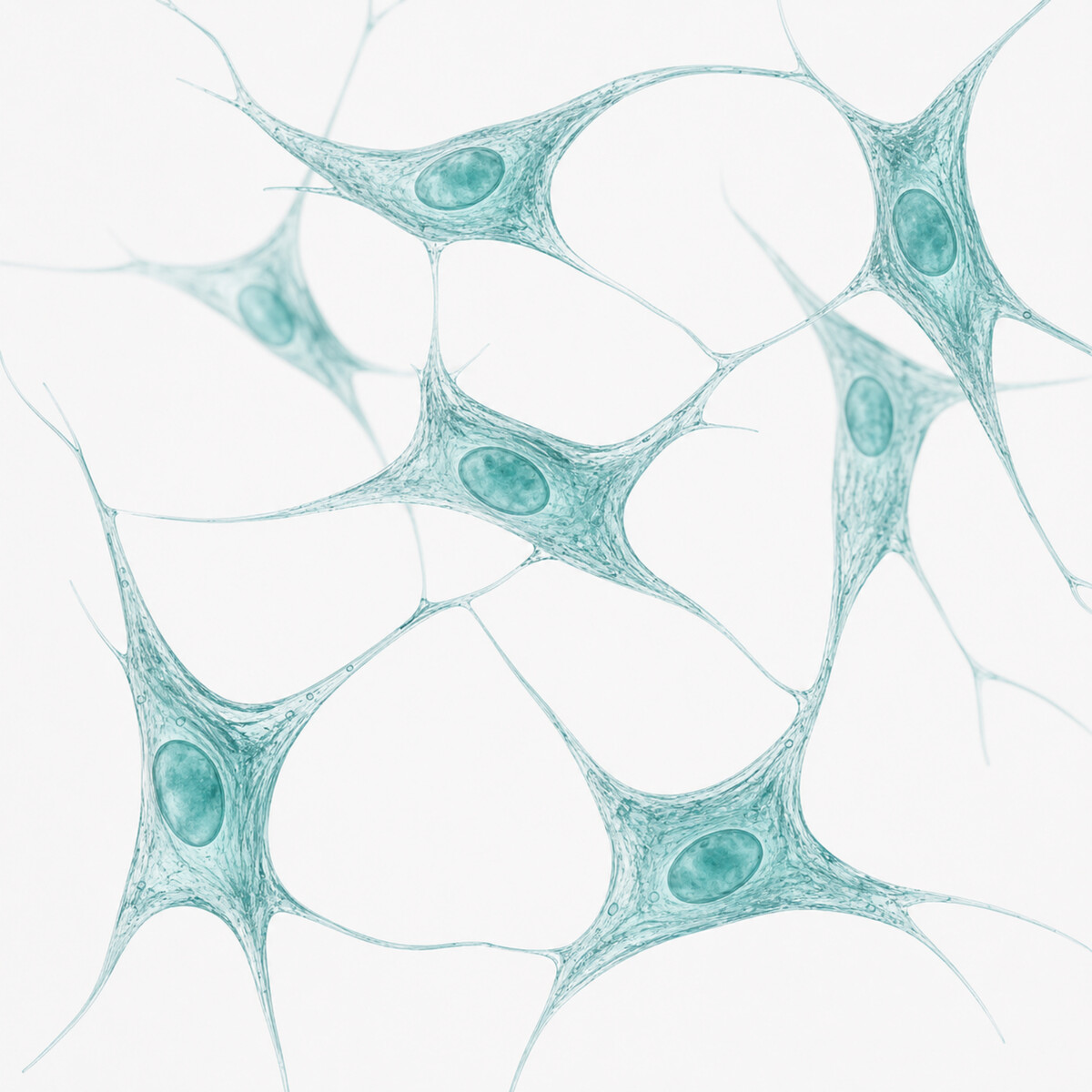
Umbilical cord mesenchymal stem cells (UC-MSCs) are the source cells our bodies use to build and repair tissue. They can self-replicate indefinitely and differentiate into bone, cartilage, muscle, and connective tissue. Unlike drugs that suppress symptoms, UC-MSCs work with the biology, supporting the tissue repair that the body already knows how to do.
Where they come from matters. MSCs from bone marrow decline in potency with age. MSCs from adipose tissue have narrower differentiation range. Wharton's Jelly UC-MSCs, harvested from newborn umbilical cord tissue that would otherwise be discarded, combine the highest proliferative capacity, youngest biology, and lowest immunogenicity available.
Once infused, MSCs don't spread randomly. They detect chemical signals released by injured or inflamed tissue, essentially help cues, and migrate toward them. This targeting behaviour, called the homing effect, concentrates the therapeutic action exactly where the body needs it.
MSCs communicate directly with immune cells (T-cells, B-cells, NK cells, dendritic cells). They calm overactive immune responses in autoimmune disease and support weakened immunity where it's needed. This is why MSCs are studied across lupus, rheumatoid arthritis, MS, and other immune-driven conditions.
MSCs release anti-inflammatory cytokines and growth factors that reduce local swelling, pain, and tissue damage. As inflammation subsides, the surrounding environment becomes more favourable for healing. This is especially important in chronic inflammatory conditions where the damage is driven by ongoing inflammation itself.
When needed, MSCs differentiate directly into replacement cells, bone, cartilage, muscle, or nerve support cells. They also secrete growth factors that stimulate nearby cells to proliferate and encourage new blood vessel formation. The combined effect is tissue reconstruction, not just inflammation control.
Much of what MSCs do happens without the cells themselves differentiating. They act as communication hubs, releasing bioactive molecules that orchestrate repair in surrounding cells. This is why a single infusion can have effects lasting weeks or months beyond the cells' physical lifespan.